Gas Line Repair & Inspection in Eltingville & Annadale, Staten Island
Safe, code-compliant natural gas piping repair, manifold pressure testing, appliance hookups, and professional Local Law 152 guidance for property owners across Eltingville, Annadale, and South Shore Staten Island.
Critical Gas Leak Emergency Safety Rules
If you smell natural gas (rotten egg odor) or suspect an active gas leak: Leave the building immediately. Do not operate light switches, touch electrical appliances, use landlines or cell phones inside, or light matches. Call 911 and your natural gas utility provider (National Grid) immediately from a safe outdoor location. Never remain inside to locate the leak or attempt repairs yourself, and do not re-enter until emergency personnel declare the property safe.
Natural Gas Piping Diagnostics & Code Compliance
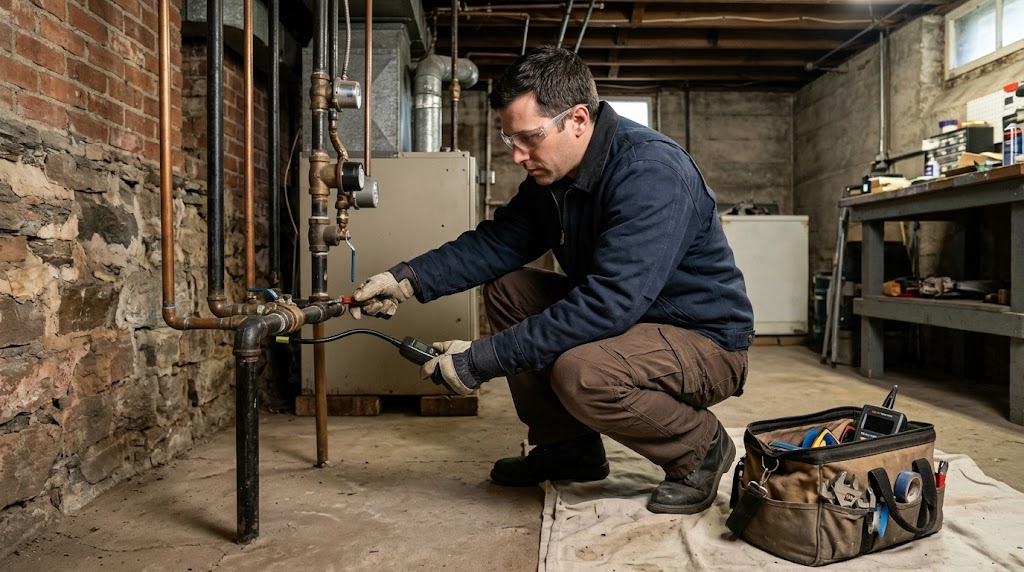
Natural gas fuels essential home systems including central boilers, water heaters, kitchen ranges, and clothes dryers. However, combustible gas piping demands meticulous technical standards. When property owners require gas line repair Eltingville and Annadale Staten Island, our licensed technicians utilize advanced electronic gas sniffers and non-corrosive bubbling solutions to locate micro-leaks along black steel pipe threads, shutoff valves, and flexible appliance connectors.
In older Staten Island basements, high cellar humidity can cause exterior rust and scale along exposed gas mains, weakening threaded joints. Replacing corroded fittings, installing quarter-turn brass ball valves, and securing pipe supports prevents structural stress and gas hazards.
Professional Pressure Testing & Utility Restorations
If National Grid has locked your gas meter following a suspected leak or periodic inspection, service cannot be restored until the piping passes an official pressure test. During pressure testing, all appliances are isolated, and the piping is pressurized with air to a certified PSI level on a calibrated gauge.
Our team identifies any pressure decay, makes required pipe repairs, verifies proper venting and combustion air supply, files required DOB NOW permits, and coordinates the official DOB and utility inspection required to unlock your gas meter.
Appliance Connections & Kitchen Range Installations
Upgrading to a high-output commercial gas stove or installing a high-recovery water heater requires verifying that existing branch piping has sufficient diameter to supply the required BTU load. Undersized piping causes gas pressure to drop when multiple appliances operate simultaneously, resulting in poor burner performance and improper combustion. We calculate total connected gas load, install code-approved flexible corrugated stainless steel connectors, and test all connections under operating pressure.
NYC Local Law 152 Periodic Gas Piping Inspections
Under NYC Local Law 152, covered buildings (such as multi-family residential properties and commercial spaces) must undergo periodic gas piping inspections conducted by or under the direct supervision of a licensed master plumber. We provide complete inspection guidance, helping building owners identify non-compliant flexible connectors, illegal utility taps, or corroded public piping to ensure full DOB compliance.
For central heating systems, learn more about our boiler repair in Eltingville & Annadale, explore water heating solutions on our water heater repair page, or view pipe leak diagnostics on our pipe leak repair page.
Frequently Asked Questions About Gas Line Repair
What should I do immediately if I smell natural gas in my home?
If you detect the sulfurous, rotten-egg odor of mercaptan or hear a hissing gas line, evacuate the building immediately with all occupants. Do not turn light switches on or off, do not use landline or cell phones inside, and do not operate electrical appliances or light matches. Once safely outside at a distance, call 911 and National Grid immediately. Never re-enter until emergency officials certify the home is completely safe.
What does a professional gas line pressure test involve?
During an official gas test, the gas piping system is completely isolated from appliances and the utility meter. The piping is pressurized with air or inert nitrogen to a specified test pressure (typically 3 to 15 PSI or higher depending on code requirements) monitored on a calibrated diaphragm gauge for a certified duration. Any drop in needle pressure indicates a leak that must be pinpointed and repaired before gas can be restored.
Are NYC Department of Buildings permits required for gas line installations?
Yes, under the NYC Fuel Gas Code, all new gas piping runs, appliance line additions, and major gas repairs must be filed through the NYC DOB NOW portal by a licensed master plumber, followed by mandatory DOB and utility inspections before National Grid unlocks the gas meter.
Learn about our full service area on our service areas page or reach out directly on our contact page.